Accidents on the ice when the weather catches us off guard
News 2025-11-20
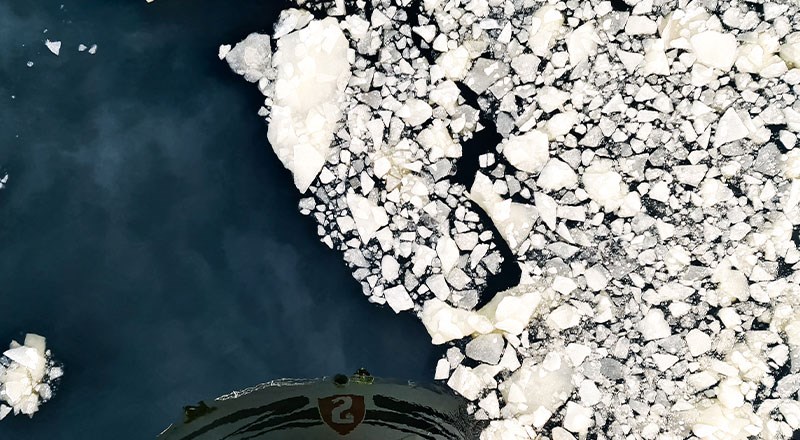
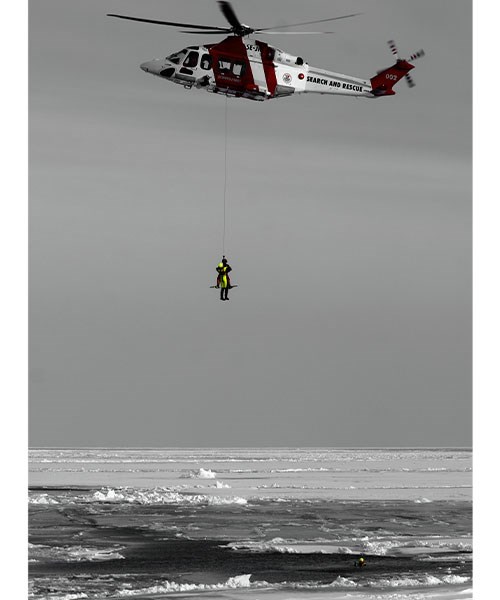
Ice conditions have become harder to assess, and several rescue coordinators describe how people find themselves in life-threatening situations in places where the ice appears stable but gives way just a few metres away. “Many people don't realise how serious it is to fall through the ice into freezing water. Things can turn critical very quickly,” says rescue coordinator Jörgen Hansson.
Despite widespread awareness of the risks, people still find themselves in dangerous situations on the ice. Sometimes, this is because they rely on previous experience and fail to notice that conditions have changed.
“Many people assume the ice is safe just because it was strong enough to support them the day before. But just a few metres away, it may be too weak. It's difficult to tell with the naked eye,” says Jörgen.
Last winter was a clear example of this. Rapid shifts between freezing temperatures and milder weather caused significant variations in ice strength, leading to several unexpected accidents towards the end of winter and into spring. There has been a noticeable change compared with the past: ice conditions that previously took weeks to change can now deteriorate in as little as half a day. This trend is expected to continue.
“We had a man riding a snowmobile on ice that, historically, had been reliable at that time of year for many years. Suddenly, the ice gave way beneath him. The mild winter had left the ice much weaker than would normally be expected for the season,” Jörgen continues.
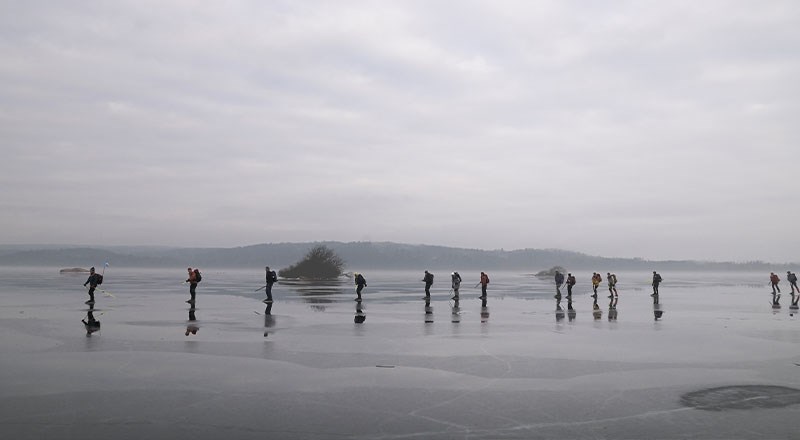
40 cm of ice? Still not thick enough
Certain recreational activities frequently feature in statistics on ice-related accidents. Ice fishing is one of the more common activities involved. Many of those who venture onto the ice are older people, sometimes using equipment that is not entirely up to date.
Dog owners can also find themselves in danger. One recurring scenario involves an owner walking their dog along the shoreline when the dog suddenly runs out onto the ice to chase something. The owner follows in an attempt to rescue the dog, sometimes resulting in both falling through the ice.
As spring approaches, the risks become even greater, and even thick ice can be extremely dangerous.
“You can have 40 centimetres of ice that still won't support your weight. If the spring ice has deteriorated, its thickness doesn't matter. Afternoons with strong sunshine are a particularly high-risk period. The ice may be strong enough in the morning but give way later the same day,” says Jörgen.
In an ice-related accident, every minute counts. This places significant demands on rescue technology, rescue coordination and individual judgement.
“The greatest challenge is getting rescue units to the scene quickly. In larger accidents, coordinating all the different rescue operations at the same time is particularly demanding. Everything has to happen under extreme time pressure, and every second matters,” Jörgen concludes.