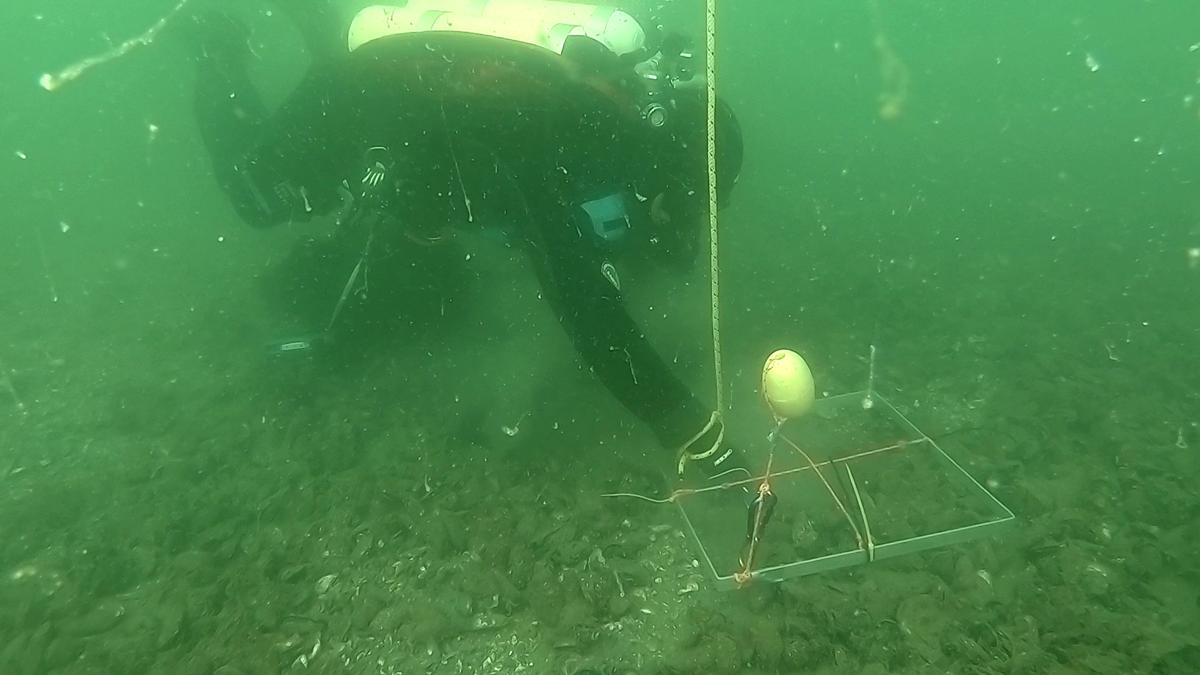
Sampling of eelgrass and blue mussel beds continues in the Göta River estuary area
News 2026-09-24
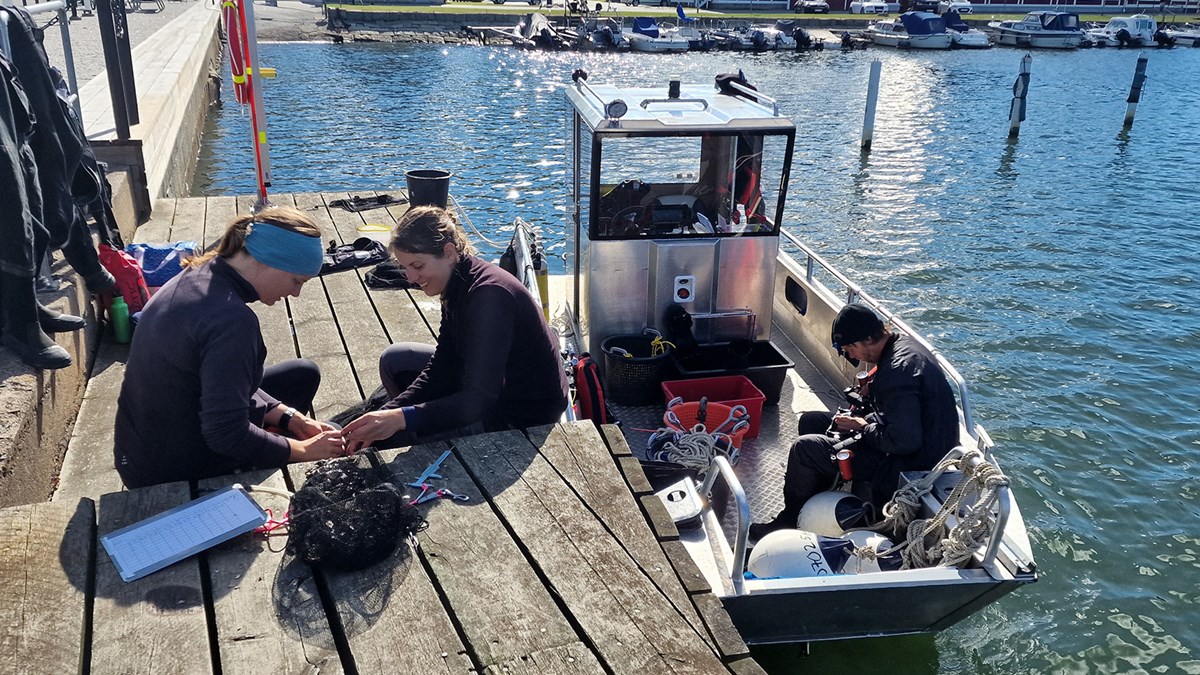
The surveys are an important part of the environmental monitoring carried out within the Skandiaporten project and will help improve understanding of how the marine ecosystem may be affected by the planned dredging works.
“By monitoring eelgrass and blue mussel beds over time, we obtain a good basis for identifying changes and assessing whether they can be linked to the project’s activities,” says Maria Carling, environmental specialist at the Swedish Maritime Administration.
The surveys have been ongoing for several years and are carried out within the framework of the Swedish Maritime Administration’s monitoring programme, which has been approved by the County Administrative Board. Sampling takes place both near the planned dredging areas and in reference areas that are not expected to be affected by the works. In this way, any changes can be monitored and compared over time.
Carrying out the surveys for several years before the dredging work begins also makes it possible to capture natural variations between different years and create a basis for comparison for the project’s continued environmental monitoring.
This year’s surveys are being carried out over two weeks in August and September. The Swedish Maritime Administration engages marine biologists to carry out the work, using both divers and drones.
Environmental monitoring during project implementation
The Skandiaporten project involves deepening the fairway into the Port of Gothenburg so that larger vessels can call at the port. The work includes, among other things, dredging and the handling of dredged material.
The recurring environmental monitoring enables the Swedish Maritime Administration to follow developments in the area and assess the project’s potential impact on the marine environment.
Read more about the project on the website: Skandia Gateway Project