
Before you set sail – 10 tips
Navigating our archipelagos requires knowledge, planning and nautical charts. It’s not just the boat that needs to be ready for launch.
1. Navigation
Nautical charts need to be kept up to date, so it is important to have the latest versions on board. Every year, approximately 2,000 changes are made to the Swedish Maritime Administration’s nautical chart database. These include everything that affects the information displayed on nautical charts, such as changes to lighthouse sectors, corrections to water depths and the relocation of navigation marks and buoys. The information in the database forms the basis for both the Swedish Maritime Administration’s paper nautical charts and most apps and other electronic navigation systems used by Swedish recreational boaters.
To make recreational boating easier, the Swedish Maritime Administration produces small-format nautical charts specifically designed for leisure boating. There are currently 16 different chart sets covering the entire Swedish coastline and the major inland lakes.
2. Weather and wind
Understanding the weather is essential for anyone spending time at sea. It is important to follow weather forecasts, but equally important to know how to interpret them. If thunderstorms are forecast, this also means there is a risk of sudden and severe changes in weather conditions. Sudden changes in weather are often more hazardous than prolonged periods of low-pressure weather with persistent wind and rain. Listen to the general marine weather forecast on Swedish Radio P1 and the coastal weather forecast on local radio.
3. Navigation training
If you want to venture a little further from your home mooring, a navigation course is a great way to learn how to find your way and navigate safely on the water.
Prepare the whole family by taking a boating course and obtaining a recreational boating certificate. This will give everyone a basic understanding of right-of-way rules, navigation, safety on board and how to interpret weather reports.
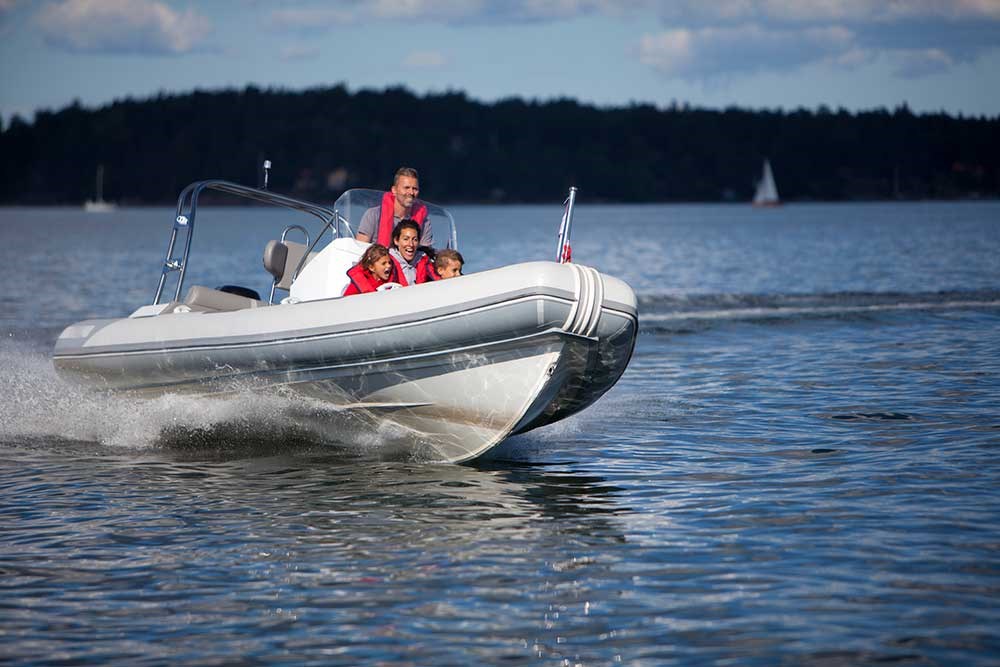
4. Everyone on board should wear a life jacket
The number of drowning accidents involving recreational boats could be significantly reduced if everyone wore a life jacket. Men in particular tend to neglect this inexpensive form of life insurance. It is not enough for the children and the dog to wear life jackets. If an accident occurs and you drown, your children will be left alone in the water.
When buying a life jacket, consider how it will be used and who will be wearing it. Take into account the wearer’s swimming ability and confidence in the water. If you only need a life jacket for a single occasion, there are many places where you can rent or borrow one. For example, the Swedish Life Saving Society has nearly 300 life jacket loan stations across the country.
5. Anchor and anchor line
Always carry an anchor and plenty of anchor line on board. An anchor can help you stop the boat if, for example, you start drifting. However, having sufficient anchor line is equally important. If you are out in a smaller boat, remember to bring oars in case the engine fails. Always use the engine kill switch lanyard to ensure that the engine stops if you fall overboard.
6. No Alcohol on the Water
Operating a boat under the influence of alcohol puts your life, the lives of those on board and those around you at serious risk. Everyone on board also needs to be able to handle an emergency.
Alcohol impairs judgement, and you may not realise the consequences of actions such as going for a swim or standing up in a small boat. In addition, communicating your location can be difficult enough in a stressful situation.
In Sweden, the legal alcohol limit for boating under the influence, where the statutory limit applies, is 0.10 milligrams of alcohol per litre of exhaled air, equivalent to approximately 0.02% blood alcohol concentration (0.2 per mille).
7. Towing assistance
For an emergency call to be classified as a maritime search and rescue incident, there must be a risk to life. Recreational boaters who run aground without being in immediate danger may find that they have to cover the cost of recovery themselves. This can be expensive unless they have boating assistance insurance or are members of the Swedish Sea Rescue Society.
8. Calling for help
Download the 112 emergency app on your mobile phone and make sure location services are enabled. In the event of an accident, use the app to call for help, as your location will be shared automatically. This gives rescue services the best possible chance of reaching you as quickly as possible. When venturing offshore, it is advisable to equip your boat with a VHF radio or a satellite-based emergency beacon.
9. Plan ahead
It pays to think one or two steps ahead in everything you do on the water. What will you do if your engine fails or you run aground? Who will you call? If you have prepared a passage plan and shared it with someone ashore, how will you let them know that you have arrived safely or made changes to your planned route?
10. Service your boat before the first trip
Take it easy on your first few trips of the season. Service the engine and moving parts before each boating season. Regularly inspect through-hull fittings, fuel hoses and cooling water hoses. Stay close to shore on your first few trips, as many recreational boaters have discovered that their engine is not in top condition only after venturing further out to sea.
Last updated 2026-11-27