
Working together to save lives
Maritime search and rescue in Sweden relies on close cooperation between government agencies, municipal rescue services and volunteers. Each contributes different resources and expertise. Together, they ensure that search and rescue (SAR) operations can be carried out around the clock, all year round.
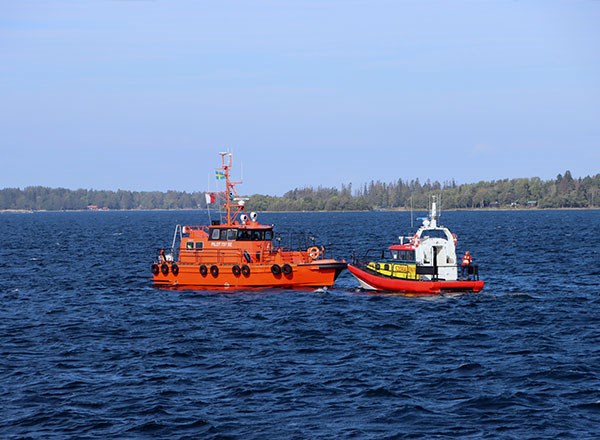
In Sweden, the Swedish Maritime Administration is the authority responsible for maritime search and rescue services. Its Joint Rescue Coordination Centre (JRCC) has operational responsibility for dispatching rescue units to accident sites and for directing and coordinating rescue operations. Not all organisations are necessarily involved in every maritime search and rescue incident. When an emergency call is received, rescue coordinators select units based on their suitability and proximity to the area. For example, operations involving accidents close to shore are usually carried out in cooperation with municipal rescue services. Effective cooperation relies on all parties understanding each other’s capabilities and being able to trust one another.
Cooperation with neighbouring countries
In addition to cooperation within Sweden, the Swedish Maritime Administration has cooperation agreements with neighbouring countries. If an accident occurs close to the border, the Joint Rescue Coordination Centre can request assistance from their vessels and helicopters. For example, a Danish rescue helicopter is often deployed in response to accidents in the Öresund Strait, as it has the shortest flight time.
Development and follow-up
The Swedish Maritime Administration is also responsible for monitoring and developing maritime and aeronautical search and rescue services. This includes evaluating rescue operations, organising training and compiling annual statistics on maritime search and rescue incidents.
Last updated 2026-11-27