
Pilots made record-breaking cruise ship call in Stockholm possible
News 2026-06-08
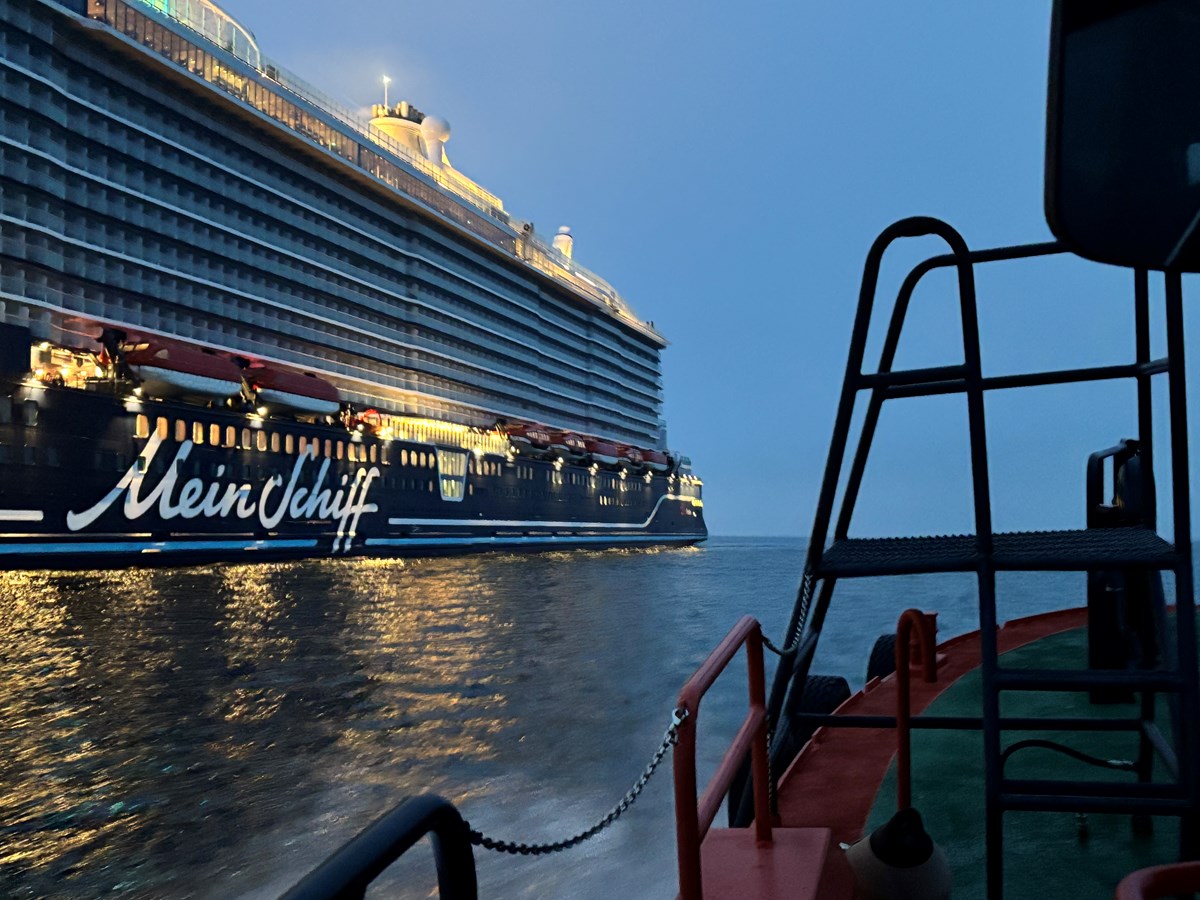
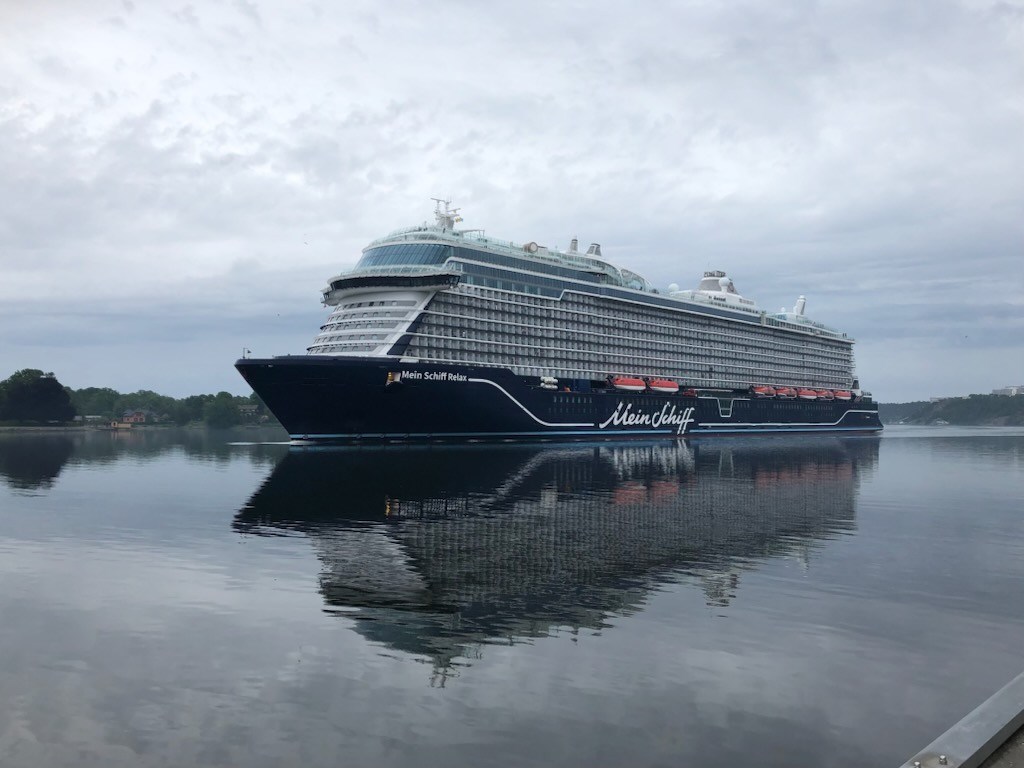
Early on Sweden’s National Day, the Swedish Maritime Administration’s pilots guided Mein Schiff Relax, the largest cruise ship ever to call at Stockholm, into port. The pilots had spent months preparing for the assignment.
— We had been looking forward to the pilotage operation, while also recognising the challenges involved. Weather conditions play a major role when a vessel is this large. If conditions exceed the maximum limits we established following the tests, even by the smallest margin, the pilotage cannot go ahead. I am very pleased that we were able to carry it out, says Carl Solax, one of the pilots.
On Saturday, 6 June, the cruise ship Mein Schiff Relax arrived at Stadsgården in Stockholm.
— It is the largest cruise ship we have ever guided through the archipelago, says Carl.
The cruise ship is 333 metres long and 42 metres wide. Vessels of this size require extensive preparation. Carl and Magnus Lindgren, the other lead pilot for the operation, travelled to a simulator facility in Hamburg as early as December.
— The Swedish Maritime Administration has a simulator in Gothenburg, where we normally carry out this type of testing, but the simulations had already been prepared in Hamburg, so it was more efficient for us to travel there. Once there, we tested various scenarios that could arise and carried out manoeuvring tests together with three captains from Mein Schiff Relax, says Carl.
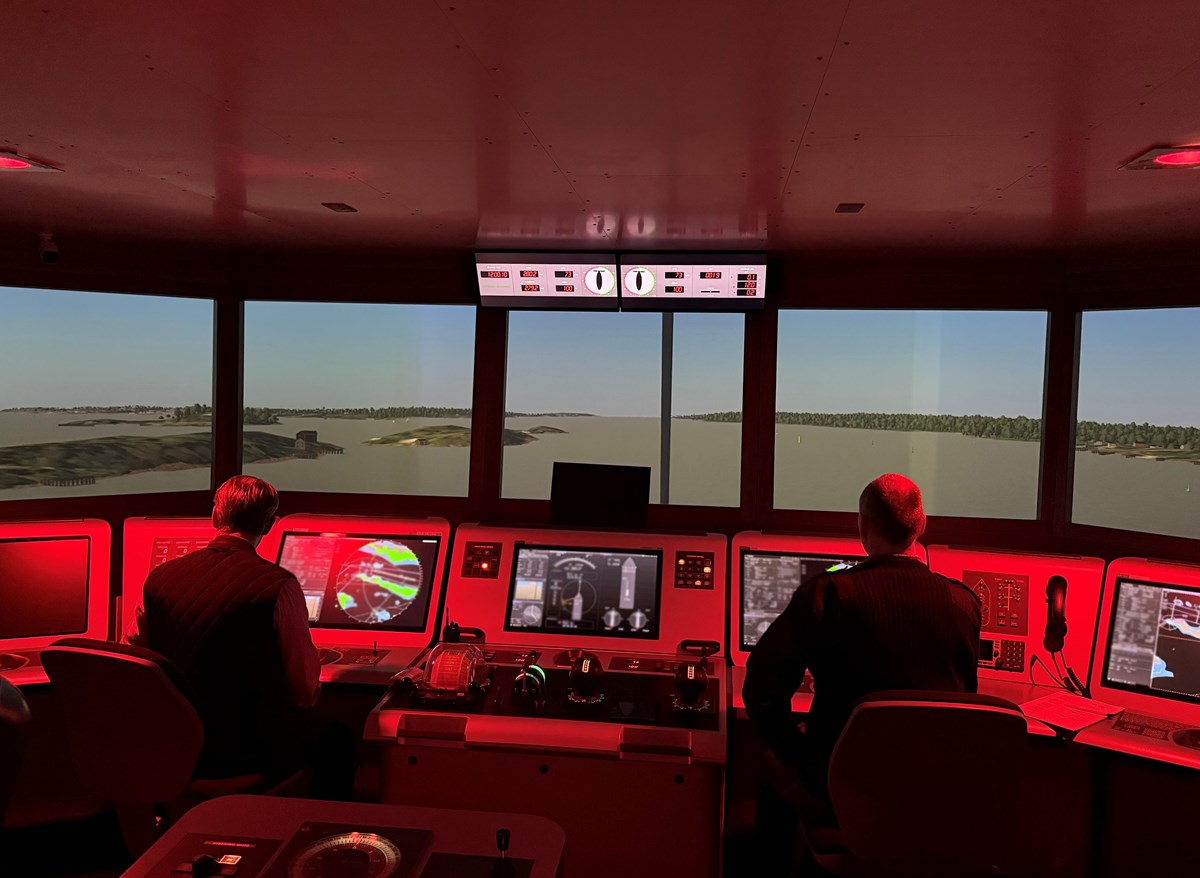
The pilots carried out simulator tests over two days. Among other things, they established that a mean wind speed of up to eight metres per second and gusts of no more than ten metres per second provided sufficiently favourable conditions to proceed with further testing. Just over a month later, three days of manoeuvring tests were carried out on board the vessel off Madeira.
— We wanted to get a real sense of how she behaves at sea, how sensitive she is to wind and, for example, how the vessel is affected by squat and bank effects (pressure differences) that can occur between the seabed and the ship’s hull in shallow water. These effects can cause the vessel to be drawn down towards the seabed. But it is equally important to meet the bridge team and understand the procedures on board, says Carl, continuing:
— At the same time, you cannot replicate exactly what it feels like to navigate through the archipelago, where there are many narrow passages. You therefore need greater safety margins to be on the safe side. It does not take much additional wind for the vessel’s effective width to increase from its actual 42 metres to 100 metres.
Safely to and from port
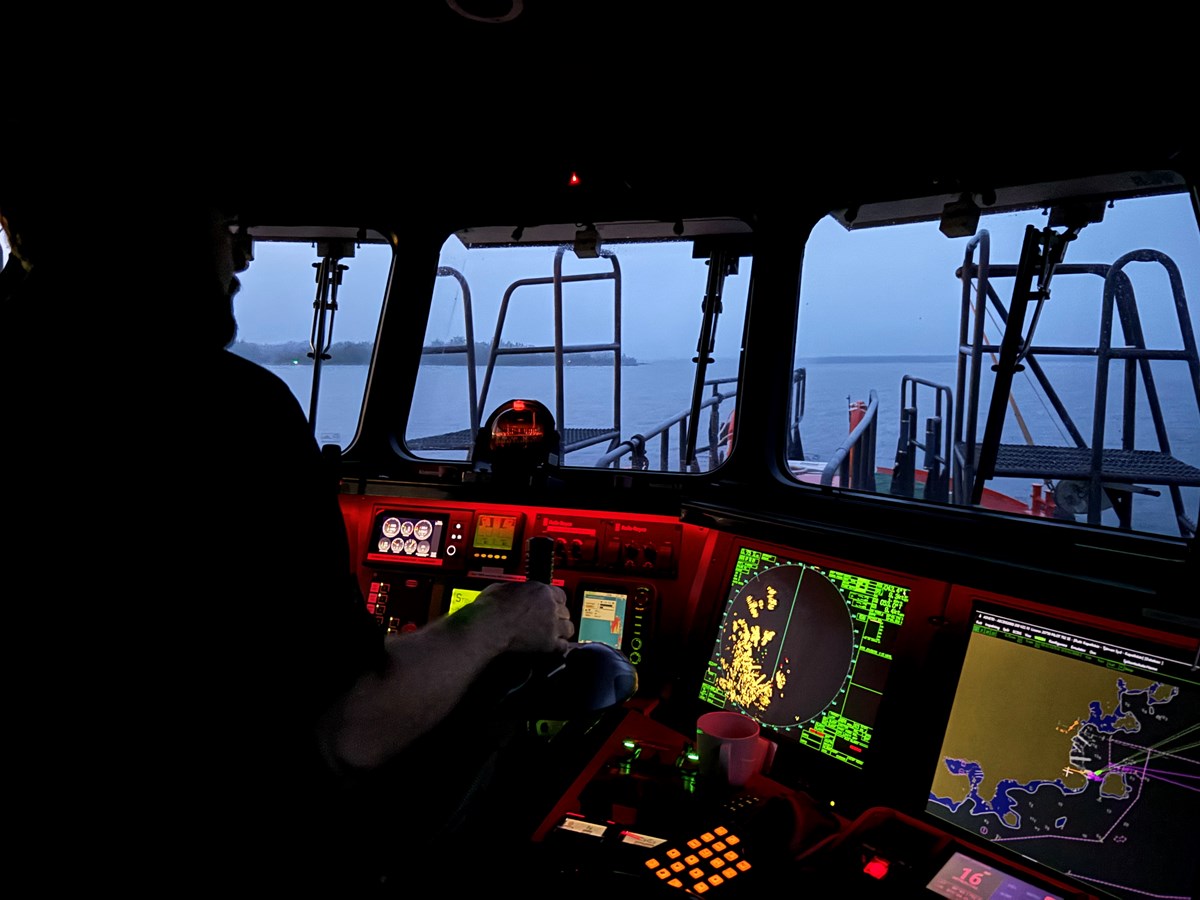
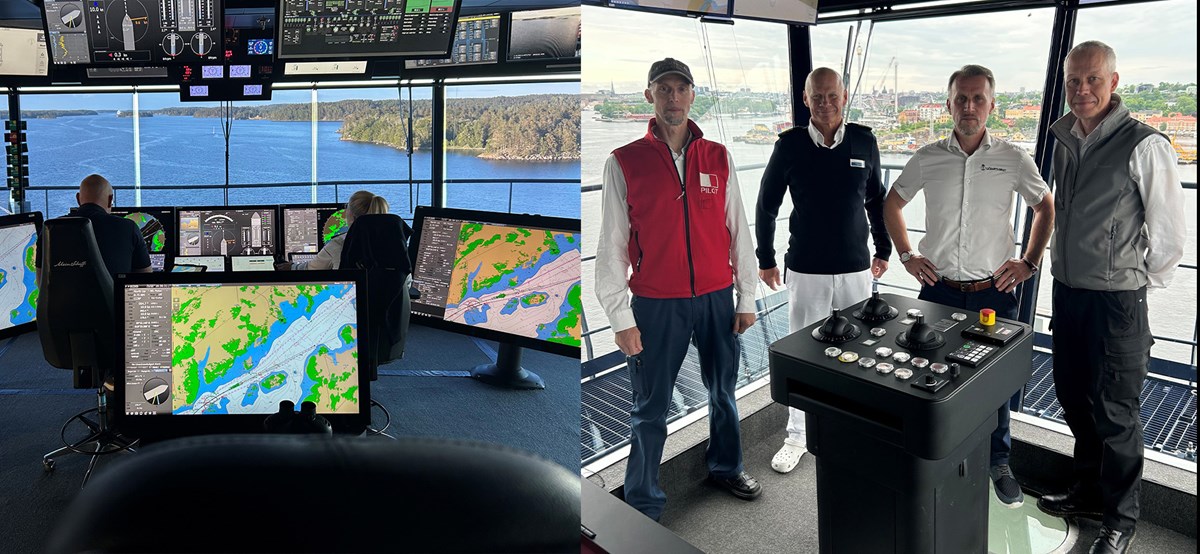
On Saturday, 6 June, the pilots were transported to the vessel by pilot boat crew members Per Eriksson and Rasmus Karlsson. At 02:45, the vessel was boarded by lead pilots Carl Solax and Magnus Lindgren, along with pilot Adam Kaijser, who joined the operation to familiarise himself with the vessel ahead of further port calls later in the summer.
The journey into port took just over five hours, with wind speeds ranging from 3 to 6 m/s. A few hours later that same day, it was time for departure with the same lead pilots, this time accompanied by pilot Magnus Wåglund. Pilot boat crew members Per Eriksson and Johan Thörnholm then provided transport back from the vessel.
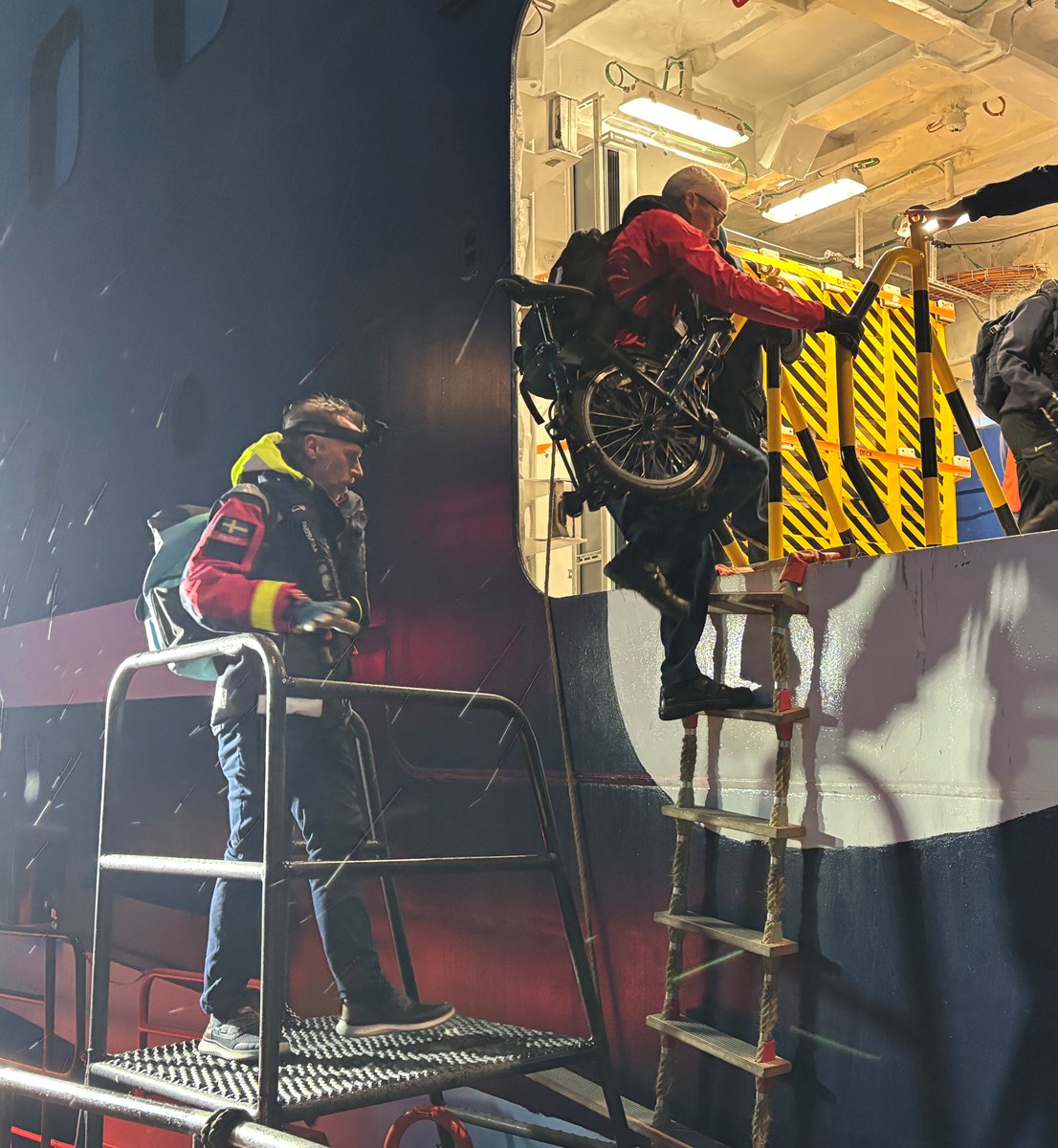
— The vessel behaved as we had expected. She is large and heavy, and her stern swings out more during turns than on smaller vessels. She also tends to drift sideways more, which has to be taken into account when approaching narrow passages. This is particularly important in Oxdjupet, where you enter the narrow section while turning. But everything went according to plan, and the pilotage operation was very successful both on arrival and departure, says Carl.
The port call was planned in close cooperation with Ports of Stockholm.
— We are pleased with the excellent cooperation with the Swedish Maritime Administration. I have great respect for the work that went into preparing for this operation and for the fact that they have now successfully completed it. It is reassuring to have pilots with this level of specialist knowledge. The port call also demonstrates Stockholm’s strong appeal as a cruise destination, and we expect more than 150 cruise ship calls throughout the year, says Stefan Scheja, Cruise and Ferry Marketing Manager at Ports of Stockholm.
About Mein Schiff Relax
Mein Schiff Relax is a relatively newly built, German-owned cruise ship and one of the most environmentally friendly cruise ships in the world. The vessel is 333 metres long and 42 metres wide, can accommodate nearly 4,000 passengers and has a crew of approximately 1,400.
Instead of conventional rudders, the vessel is equipped with azipods, large forward-facing propulsion units that make manoeuvring somewhat different. The vessel also has two large five-bladed propellers at the stern, which can be used, for example, to reduce speed. Slowing the vessel from 21 knots to 5 knots takes approximately 25 minutes and requires a distance of almost seven kilometres.
About the Swedish Maritime Administration’s pilots
While others celebrate Sweden’s National Day, Christmas or Midsummer, the Swedish Maritime Administration’s pilots are working to ensure safe shipping to and from Sweden’s ports. A pilot is always ready, regardless of the weather, time of day or season.
To become a pilot, you need a Master Mariner qualification and experience serving as an officer on larger vessels. Once accepted, candidates undergo training at the Swedish Maritime Administration, followed by practical training in the area where they will eventually work as pilots.
Thorough knowledge of the archipelago is essential, and pilots must be able to navigate and manoeuvre all types of vessels. Experience in piloting increasingly larger vessels is built up gradually, and it is usually only after five or six years as a pilot that they begin handling the very largest vessels, measuring 300 metres or more.
Read more about the profession (in Swedish): Working as a pilot at the Swedish Maritime Administration