
The Skandiaporten project moves forward
News 2026-05-04
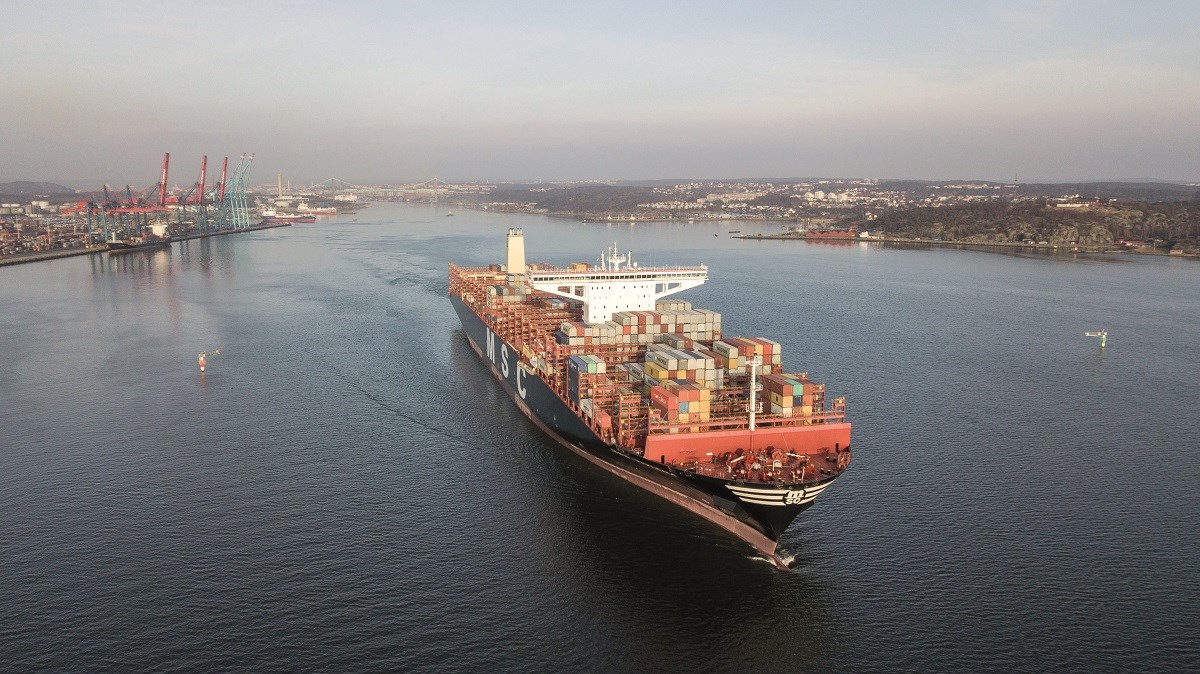
The Swedish Maritime Administration and the Port of Gothenburg are moving forward with the Skandiaporten project following an optimisation of the fairway design. The result is lower costs and reduced environmental impact, while maintaining the fairway’s functionality and safety. Procurement is now underway for the final piece of the puzzle – the Swedish Maritime Administration’s major contract for fairway improvements.
Separate procurements for greater control and reduced risk
As part of the optimisation, the previously joint procurement process is being divided into two separate contracts. The Port of Gothenburg is responsible for dredging and rock excavation alongside the quay, with work starting in autumn 2026. The Swedish Maritime Administration is responsible for procuring dredging works and improvements to the fairway's channel marker lights, with implementation scheduled for 2027–2028.
“The division is necessary to enable the Port of Gothenburg to maintain its schedule for completing the quay reinforcements, as this work depends on dredging being carried out alongside the quay,” says Jan Andersson, Project Manager at the Port of Gothenburg.
Optimised fairway with maintained capacity
The joint procurement process for dredging works was cancelled in October 2025 after the bids received indicated higher costs than anticipated. During the winter, a revised fairway design was analysed, simulated and verified.
By adjusting the width and layout of the fairway, dredging volumes have been reduced. This lowers both costs and environmental impact, while ensuring that the planned design vessel can continue to navigate the fairway safely.
“Since the procurement process was cancelled, we have conducted a thorough review of the project's scope and conditions. Through technical simulations, dialogue with the market and targeted adjustments, we have reduced costs as far as possible without compromising the project's functionality and benefits. This provides us with a solid foundation for the procurement process now underway,” says Jenny Röström Wicander, Project Manager at the Swedish Maritime Administration.
“The optimisation delivers significant savings while maintaining the fairway's functionality and safety. We have explored every possible option to ensure maximum value for every krona invested,” says Joel Smith, Director of Infrastructure at the Swedish Maritime Administration.
The changes include:
Narrowing the fairway along selected sections
Reducing the dredged area in the southern and eastern parts of the turning basin
Maintaining the planned fairway depth of 16.5 metres, with an option to deepen it to 17.5 metres
Retaining up to five channel marker lights in their existing positions
Lowering the wind speed limit for arriving vessels, which will have some impact on accessibility but is considered manageable within the project's overall objectives
Increased budget and new procurement process
The Swedish Maritime Administration's part of the project has been granted an increased budget to enable implementation within the optimised scope. The next step is to procure a contractor, with the aim of signing a contract in early 2027. Dredging is scheduled to begin in August 2027, and the project is expected to be completed by the end of 2028.
“We are pleased to be able to move forward with the next phase. The optimisation carried out demonstrates that we can achieve our established objectives. Our ambition remains for the new fairway and quay to become operational from 2028,” says Joel Smith.
About Skandiaporten
The Skandiaporten project aims to secure direct maritime shipping services to Sweden and ensure that Swedish businesses maintain access to global markets. The Port of Gothenburg is the only port in Sweden capable of accommodating the world's largest vessels. However, ships are becoming increasingly larger, and the current depth of the fairway already prevents the largest vessels from calling at Gothenburg when fully loaded. To secure future trade, the port needs to be adapted to meet the demands of modern shipping. The project is a collaboration between the Swedish Maritime Administration, the Swedish Transport Administration and the Port of Gothenburg.