
A Better and More Adaptable Pilotage Service
The pilotage service is being developed to become more adaptable and flexible in response to traffic patterns and safety conditions, while creating a fairer and more sustainable working environment for employees.
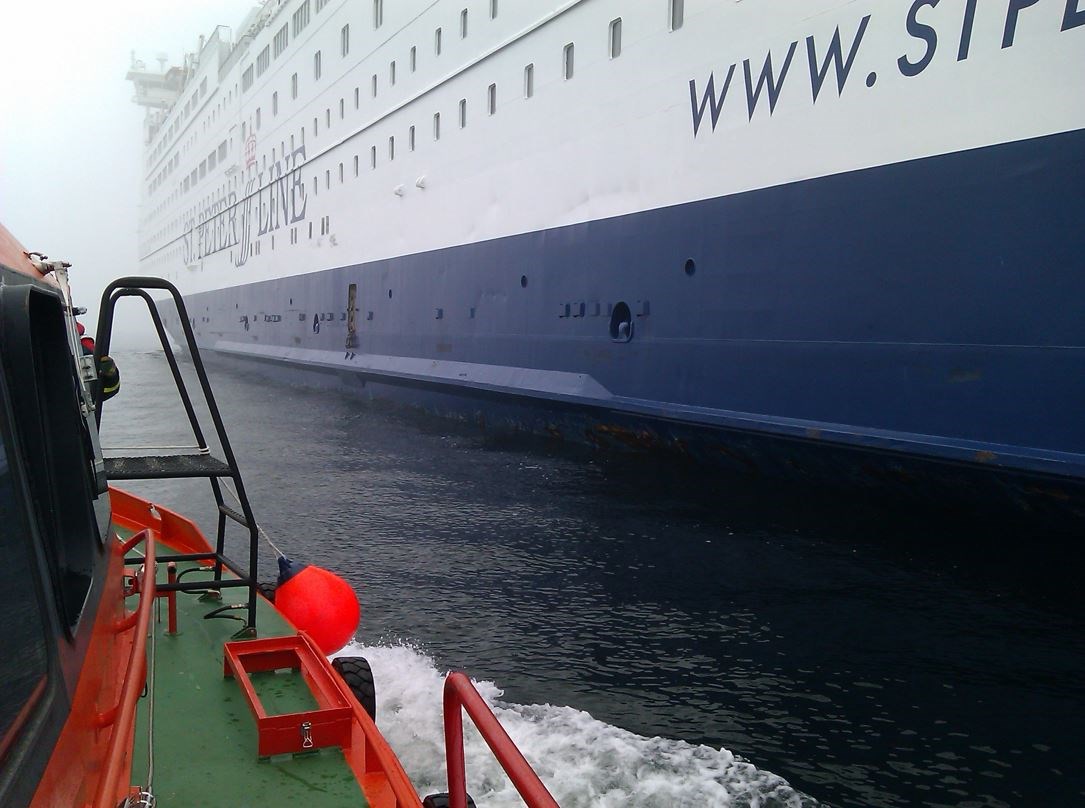
As part of the development of our pilotage operations, we are reviewing pilots' work schedules and working to enable more pilots to obtain pilotage authorisations for neighbouring areas where there is a need. However, the most significant developments and changes currently concern:
Planning of pilotage assignments: Replacing local instructions and assignment rotation lists with a common national planning instruction.
Pilot boat operations: The Swedish Maritime Administration has terminated the local collective agreements for pilot boat crews and will transition to the central collective agreements AVA/AVA Sjö in the autumn. At the same time, changes are being made to the organisation of pilot boat transport and fairway services. Some stations will be merged, partly to enable crews to carry out pilot transfers across larger geographical areas, thereby increasing their availability.
Currently, certain restrictions within the system prevent us from deploying our personnel where they are needed most.
Why Are These Changes Necessary?
Employee benefits and working conditions vary across the country, creating inequalities and making the current system difficult to justify and explain. Procedures for managing pilotage assignments and pilot boat transfers also differ between geographical areas.
The changes are intended to make the pilotage service more responsive to traffic patterns, strengthen our resilience and preparedness for crises or war, and maintain a good working environment.
A more consistent national approach will also make it easier for the Swedish Maritime Administration to explain its operations to the maritime industry, as procedures will be based on the same principles throughout the country.
Objectives
The development work aims to establish a standardised, fair and flexible way of working that is fit for the future.
Through these changes, we aim to maintain high-quality service delivery, ensure long-term financial sustainability, preserve a safe working environment, offer attractive employment conditions for all employees, increase operational redundancy, and establish a system that is fair, transparent and easy to explain to current and prospective employees as well as the maritime industry.
Will These Changes Affect the Delivery of Pilotage Services?
The Swedish Maritime Administration's objective is that the maritime industry should not experience any disruption in the short term as a result of the ongoing internal changes. At the same time, we will need to continuously evaluate the changes to ensure that the new arrangements function as effectively as possible.
In the longer term, we hope to be able to meet the industry's needs to an even greater extent, with increased efficiency, while further strengthening Sweden's preparedness and resilience.
Next Steps
The Swedish Maritime Administration has decided to introduce and implement the new national planning instruction. It was introduced during the spring in the South, West, Lake Vänern and North areas. Implementation in the remaining areas – Södertälje, Stockholm and Oxelösund – is planned for the autumn.
Pilot boat transport operations will transition to the central collective agreements AVA/AVA Sjö in October, coinciding with the introduction of the new organisational structure.
Questions?
Please contact your nearest pilotage or pilot transport area office, or email lotsledning@sjofartsverket.se.
Last updated 2026-10-12